Commercial Plumbing Services in Boerne, TX: Permits, Codes, and Contractor Registration
Commercial plumbing work in Boerne is not just about pipes, fixtures, drains, and water heaters. It sits at the intersection of city permitting, code compliance, state licensing, and local utility rules. If you own, manage, build, or lease commercial property in Boerne, those moving parts matter more than most people realize, especially once a job moves beyond a simple service call.
That is where confusion usually starts. A business owner sees a leak, a recurring drain backup, or an aging water heater and searches for a “plumber near me.” The immediate concern is getting the problem fixed fast. The longer-term concern, and often the more expensive one if it gets overlooked, is whether the work requires a permit, whether the contractor is properly registered with the city, and whether the work will meet the code the city is enforcing.
In Boerne, those questions are not abstract. The city has official permitting and code-compliance oversight for plumbing work, including commercial projects. It also requires contractor registration for work in city limits. On top of that, Texas regulates who can legally perform and contract plumbing work through state licensing. When those layers line up, jobs tend to go smoother. When they do not, projects stall, inspections get delayed, and owners end up paying twice for the same work.
Why commercial plumbing gets more scrutiny
Commercial plumbing systems are usually larger, busier, and less forgiving than residential systems. A small office suite and a restaurant may both be “commercial,” but the plumbing demands can be completely different. Even within the same building, usage can vary by tenant, by season, or by business hours. A restroom that seems fine during a light week can turn into a maintenance problem once occupancy picks up.
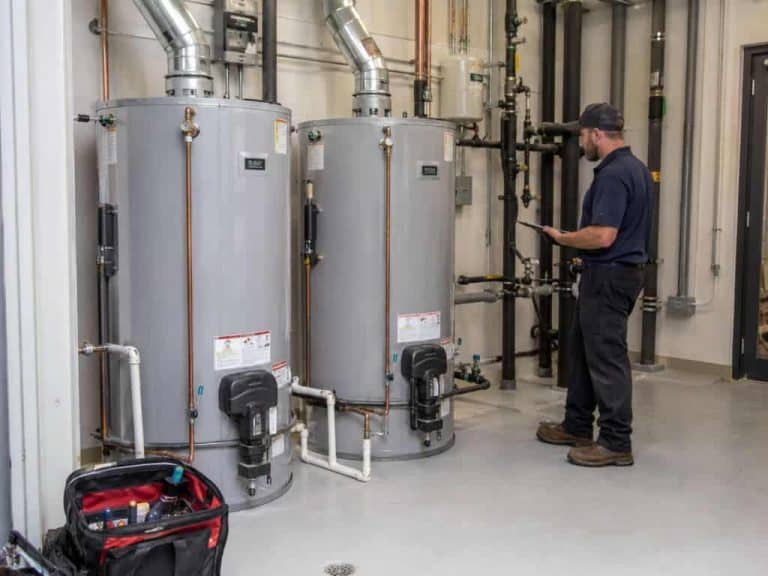
That is one reason city oversight matters. Boerne’s permitting and code-compliance process covers plumbing, mechanical, fuel gas, and energy work. In practice, commercial plumbing often overlaps with more than one of those categories. A water heater replacement, for example, may not be only a plumbing conversation if venting, fuel gas, or energy-code issues are part of the scope. Good contractors know that the pipe itself is only part of the job.
The city also uses the 2021 International Plumbing Code, along with related 2021 ICC codes. That matters because code is the baseline for acceptable work. It is what inspectors and contractors refer back to when there is a question about how something should be installed or repaired. Owners do not need to memorize a code book, but they do need to understand that “it works” and “it complies” are not always the same thing.
I have seen this gap play out in all kinds of commercial settings. A repair may stop a leak today, but if the broader installation does not satisfy the applicable code or permit requirements, the problem is merely postponed. In a business environment, postponed problems usually show up at the worst possible time, during tenant improvements, an ownership transfer, a city inspection, or a remodel with a hard opening date.
What Boerne regulates on the city side
Boerne’s role is straightforward in concept, even if projects can get complicated in the field. The city issues permits for both residential and commercial projects and requires contractor registration for work within the city limits. For commercial plumbing services, that means there is a formal process behind the scenes, not just a handshake and a truck in the parking lot.
Permits exist because plumbing affects health, safety, and building performance. Water supply, sanitary drainage, sewer connections, and certain equipment installations all have broader consequences when they are done poorly. In a commercial building, one bad decision can affect employees, customers, neighboring suites, and building operations.
Contractor registration matters for a similar reason. It gives the city a way to ensure contractors working in Boerne have met local administrative requirements before taking on regulated work. Owners sometimes assume that a state plumbing license is the only credential that matters. It is critical, but in Boerne it is not the whole picture. A contractor can be properly licensed at the state level and still need to complete city registration to work legally within city limits.
That distinction is easy to miss when a project is moving fast. It is even easier to miss on smaller commercial jobs, especially when someone frames the work as “just a replacement” or “just a repair.” The safe approach is to ask early, not late, whether the work needs a permit and whether the contractor is registered with the city for that work.
State licensing is not optional
Texas plumbing work is regulated by the Texas State Board of Plumbing Examiners. That is the state framework that determines who can lawfully perform plumbing work and who can offer plumbing services to the public. Licenses renew annually, which is one of those practical details that business owners should not ignore. A company that was properly licensed last year still needs to be properly licensed now.
The licensing structure also matters when you are trying to understand who is actually responsible for the work. Texas states that a Journeyman Plumber may install, change, repair, service, or renovate plumbing under a Responsible Master Plumber. It also states that Responsible Master Plumbers are the individuals licensed to offer and contract plumbing work to the public.
That is a useful distinction because many owners never ask it directly. They ask whether a technician is “licensed,” but they do not ask under whose authority the company is contracting the work. On a commercial project, that chain of responsibility matters. If permit questions, inspection questions, or scope questions come up, you want clear accountability from the start.
A competent commercial plumbing contractor will usually be comfortable answering those questions without getting defensive. They know commercial clients have more at stake. They also know delays ripple outward. One missing registration, expired license, or permit oversight can hold up other trades and throw off scheduling for an entire tenant finish-out or facility upgrade.
The code question most owners ask too late
Most business owners do not think about plumbing code until there is an inspection or a disagreement. That is understandable. Code language can feel technical, and many people would rather focus on operation and budget than on regulatory details.
Still, Boerne’s use of the 2021 International Plumbing Code is not a background footnote. It influences how work is reviewed and approved. It shapes the expectations for installations and modifications in commercial spaces. If a contractor treats code as an afterthought, the owner often inherits the risk.
That risk shows up in several ways. Sometimes a project has to be revised after work has already started. Sometimes a repair that looked inexpensive becomes more involved because the surrounding conditions do not support a compliant installation. Sometimes a business owner learns that a “quick fix” was quick only because someone skipped part of the process.
The best commercial plumbers tend to have a practical relationship with code. They do not use it as a scare tactic, and they do not wave it away. They explain when code affects cost, when it affects materials, and when it affects timing. They also understand that in commercial settings, the right answer is not always the cheapest immediate answer.
Permits are part of planning, not just paperwork
Owners often think of permits as something pulled after the scope is set, but on commercial jobs they are better treated as part of planning. If the city has permitting authority over commercial plumbing work, then permit timing can influence scheduling, inspections, and occupancy planning.
That matters for renovations and build-outs, but it also matters for service-driven work that grows into something larger. A recurring drain issue can reveal a deeper problem. A water heater replacement can expose code-related changes that need to be addressed. A leak behind a wall can expand into a broader repair once access opens up.
In the Boerne market, many plumbing providers publicly advertise services such as sewer line cleaning, hydro jetting, snaking, leak detection and repair, water heater installation or replacement, and commercial plumbing. Those are common needs, and they cover everything from urgent service calls to more involved system work. The trick is recognizing that not every service belongs in the same administrative bucket. Drain cleaning is not the same as a permitted installation. Leak detection is not the same as a system renovation. A replacement is not always just a swap.
Owners get the best results when they ask permit questions before authorizing larger work. That does not slow things down. In many cases, it prevents rework and confusion later.
Contractor registration in Boerne, and why it matters more than people think
City contractor registration sounds like an administrative detail, but it affects real project outcomes. If Boerne requires contractor registration for work in city limits, then registration is part of a contractor’s readiness to perform regulated work locally. It is not the glamorous part of commercial plumbing, but it is one of the first signs that a company handles municipal work professionally.
Registration tends to separate companies that regularly work within city processes from companies that mostly operate informally or only in less regulated settings. That does not automatically tell you who does better wrench work in a mechanical room, but it often tells you who is less likely to trip over compliance issues.
For owners and property managers, the value is simple. Registered contractors are better positioned to move through city channels without last-minute scrambling. That matters if a project is tied to a tenant turnover, a scheduled shutdown, or a reopening date. It also matters if inspections or approvals become part of the path forward.
Here are a few questions worth asking before commercial plumbing work starts:
- Does this scope require a city permit in Boerne?
- Is the contractor registered to work within Boerne city limits?
- Who is the Responsible Master Plumber for the company?
- Is the state license current?
- Will any part of the work overlap with mechanical, fuel gas, or energy requirements?
Those questions are simple, but they do a lot of work. They move the conversation from assumptions to accountability.
Sewer work deserves extra respect
Commercial owners often underestimate sewer-related plumbing until the first ugly backup interrupts business. Boerne’s public works specifications include sanitary sewer infrastructure and mechanical cleaning requirements, which tells you the city maintains formal standards around sewer-related work. That does not mean every service call becomes a public works project, but it does reinforce a larger point: sewer work is not casual work.
This comes up often with recurring clogs and sluggish lines. A business may start with snaking, move to hydro jetting, and then realize the pattern keeps returning. Local companies in the Boerne area do advertise sewer line cleaning, hydro jetting, and snaking, so those tools are part of the service landscape. The practical challenge is deciding when a maintenance response is enough and when the condition points to a larger system issue.
A restaurant, retail center, office building, or mixed-use property may experience the same symptom for different reasons. One line may need cleaning. Another may have a deeper defect that cleaning alone will not solve. In commercial settings, a wrong call can cost a lot in downtime. That is why experienced plumbers tend to look for patterns instead of chasing isolated symptoms.
When sewer work touches city standards, site conditions, or larger infrastructure concerns, owners should expect a more disciplined process. The days of solving everything with a cable and crossing your fingers are long gone, especially where city compliance is part of the picture.
Leak repairs and the one-time water adjustment many people miss
One useful local rule in Boerne does not get enough attention. The city’s utility rules allow a one-time water-usage adjustment for a plumbing leak if the consumption is at least 50 percent above the customer’s yearly average. The customer must provide a repair bill or parts receipts. In certain leak cases between December and March, sewer charges may also be adjusted.
For commercial customers, that can matter quite a bit. Leaks in commercial buildings are not always dramatic. A concealed leak can run long enough to produce a painful utility bill before anyone notices. I have seen owners focus so heavily on the repair itself that they forget to think about the billing side of the damage.
The adjustment rule does not erase the leak, and it is not a substitute for fast repair, but it does create an incentive to document everything properly. If a leak drives water use sharply above normal, the paperwork from the repair may become important. That is another reason to use a legitimate contractor and keep records organized.
A practical response to a high bill tied to a plumbing leak usually includes a few steps:
- Confirm the leak and stop the water loss as quickly as possible.
- Keep the repair invoice or, if applicable, parts receipts.
- Compare the affected usage to the account’s yearly average.
- Ask whether the city’s one-time adjustment criteria are met.
- Review whether a sewer-charge adjustment may apply for qualifying winter-period leaks.
This is one of those real-world intersections between plumbing and operations that business owners appreciate once they know it exists. A repair that seems costly on day one can become less painful if the utility side is handled correctly.
Choosing the right commercial plumber in Boerne
When people search “plumber near me,” they are usually trying to solve an immediate problem. For a homeowner, that may be enough. For a commercial customer in Boerne, it is only the starting point.
The right commercial plumber is not just nearby. The right one understands city permits, city registration, state licensing, and the practical realities of commercial buildings. They also understand that different types of work demand different levels of coordination. A drain cleaning call is one thing. A code-sensitive installation inside an occupied business is something else entirely.
The best conversations usually happen when the contractor can explain scope clearly in plain language. You want to hear whether the issue looks like maintenance, repair, replacement, or a larger compliance-related project. You want to know what is urgent, what can be scheduled, and what may require coordination with the city.
There is also value in how a company handles uncertainty. Honest contractors do not pretend every answer is simple. If permit needs depend on the precise scope, they say so. If code implications may change once walls are opened or equipment is evaluated, they say that too. Commercial owners are generally fine with complexity when it is explained upfront. What they hate are surprises that could have been mentioned earlier.
Where owners get into trouble
Most commercial plumbing trouble in a city like Boerne starts with one of three assumptions. The first is assuming that every plumbing task is small enough to treat as routine service. The second is assuming that state licensing automatically covers every local requirement. The third is assuming that nearby plumbers if water is flowing and drains are clearing, the work must be acceptable.
None of those assumptions are safe.
Commercial plumbing exists inside a regulated environment. Boerne has permitting and code-compliance oversight. It requires contractor registration. It uses the 2021 International Plumbing Code and related 2021 ICC codes. Texas regulates plumbing licenses, including who may contract plumbing work to the public. Local utility rules can even affect how a leak-related bill is handled after repairs are made.
Once you see the whole picture, the path gets clearer. The goal is not bureaucracy for its own sake. The goal is safe, lawful, durable work that holds up under use and under review.
For business owners, property managers, and tenants planning improvements, the practical takeaway is simple. Treat commercial plumbing as both a trade service and a compliance issue. Ask permit questions early. Verify registration in Boerne. Confirm the state plumbing license structure behind the company. Keep repair documentation, especially if a leak causes a spike in water use. And if a search for “plumber near me” leads you to a commercial contractor, make sure the conversation goes beyond response time and price.
A well-run commercial plumbing job in Boerne should solve the immediate problem and satisfy the layers behind it. That is the standard worth paying for.